Yoga for all: how one teacher is reshaping what inclusion looks like
SHARE


Accessibility and inclusive yoga are at the heart of the British Wheel of Yoga’s (BWY) mission. This article highlights how long-time BWY teacher and therapist, Richard Kravetz, is reshaping what accessible yoga looks like in the UK. From chair-based yoga to sensory-adapted practices, his work demonstrates how yoga can support disabled people, older adults, carers and anyone with additional needs. If you are looking for guidance on inclusive yoga training, chair yoga or adaptive practices for people with disabilities, Richard’s story offers practical insight of what yoga for every body can be.
For Disability History Month (20 November–20 December 2025), this is also a story about one person quietly changing what ‘accessible yoga’ means in the UK – and why his work matters to anyone who has ever felt left out of movement or community.
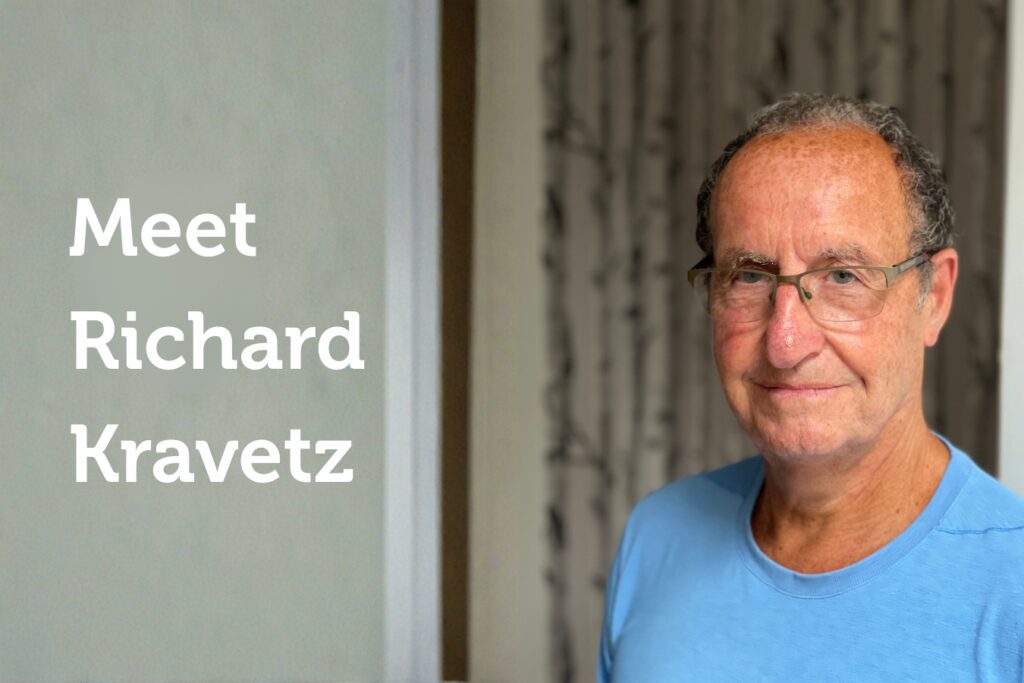
Meet Richard Kravetz
Based in North London, yoga teacher and therapist Richard Kravetz has spent more than three decades making yoga genuinely accessible. He has taught over 8,000 classes, including around 3,000 chair-based sessions, reaching an estimated 130,000 students across London and beyond. His work spans disabled children and adults, older people, carers, and anyone who might otherwise be excluded from physical activity, and his company name – Yoga for All – reflects a belief he lives every day: yoga is for every body.
The story behind the practice
Richard trained with the British Wheel of Yoga (BWY) more than 30 years ago, but his mission really took shape in 1988, when his son was born with Global Developmental Delay and needed round-the-clock care. Yoga became his emotional anchor at a time of uncertainty and exhaustion, offering moments of steadiness in the middle of hospital appointments and sleepless nights. Seeing how isolated other fathers of disabled children felt, he set up a support group for dads, using simple yoga practices and honest conversation to help them cope, and that experience sparked a lifelong commitment to families living with disability.
From idea to inclusion
As Richard witnessed the strain disability can place on both individuals and carers, he began adapting yoga practices so people with special needs – and those supporting them – could participate safely and confidently. He contacted organisations across London, offering tailored sessions for disabled children and adults, their carers and families, often long before inclusive yoga was common language in studios or community centres. In 2000, he worked with Jyoti Manuel to establish Special Yoga in London, helping build a national body dedicated to yoga for people with special needs and creating some of the early models for chair-based and sensory-adapted sessions.
Training others to widen the circle
Richard has never seen inclusion as a solo project, and a big part of his impact comes from teaching other teachers. Through training programmes with the BWY and Special Yoga, he has supported more than 400 yoga teachers to adapt their classes for people with additional needs, from simple chair-based options to practices for people with learning disabilities or complex health conditions. Many of those teachers now run accessible classes in their own communities.
Community, carers and social prescribing
As his son grew, Richard increasingly focused on adults with special needs, working with people to build confidence, mobility and connection through movement and breath. Volunteering with the BWY London committee, he helped shape inclusive events, developed further training opportunities and supported fundraising efforts, contributing to more than £20,000 raised over a decade for community causes. Long before social prescribing became widely recognised, he volunteered as a Practice Health Champion at St George’s GP Surgery, where local GPs referred patients experiencing poor mental health, loneliness or limited mobility to his gentle chair-based classes, wellbeing walks and supportive community space.
A pioneer of chair yoga
Richard is considered one of the early pioneers of chair yoga in the UK, particularly in the way he has used it to reach people with complex needs. For more than twenty years, he has worked with Sense, the national charity for people who are deafblind or have complex sensory impairments, creating and delivering accessible sessions for people in wheelchairs and writing Sense’s yoga programme to support wider delivery. His weekly classes at Pancras Leisure Centre bring participants and carers from across London, many travelling long distances because the mix of routine, familiarity and kindness they find there is hard to replicate elsewhere.
What Disability Awareness Month can learn from Richard
Over three decades, Richard has championed inclusion long before it became a mainstream priority, supporting carers as much as the people they care for and equipping hundreds of yoga teachers to teach more inclusively. His story is a reminder that disability inclusion is not only about ramps, funding or specialist equipment, but also about attitudes: patience, creativity, listening and a willingness to adapt practices so that everyone can take part in a meaningful way.
For Disability Awareness Month, his work offers a hopeful message – that with the right support and a genuinely open approach, yoga can be a place where disabled people and carers feel seen, respected and fully part of the community.
If you’d like to see Richard’s work in action, you can watch a short film about his classes here: https://youtu.be/o4yTI1Npkeg (Source: Sense)
For all media inquiries
Natalie Lyndon, BWY PR & Communications Officer